

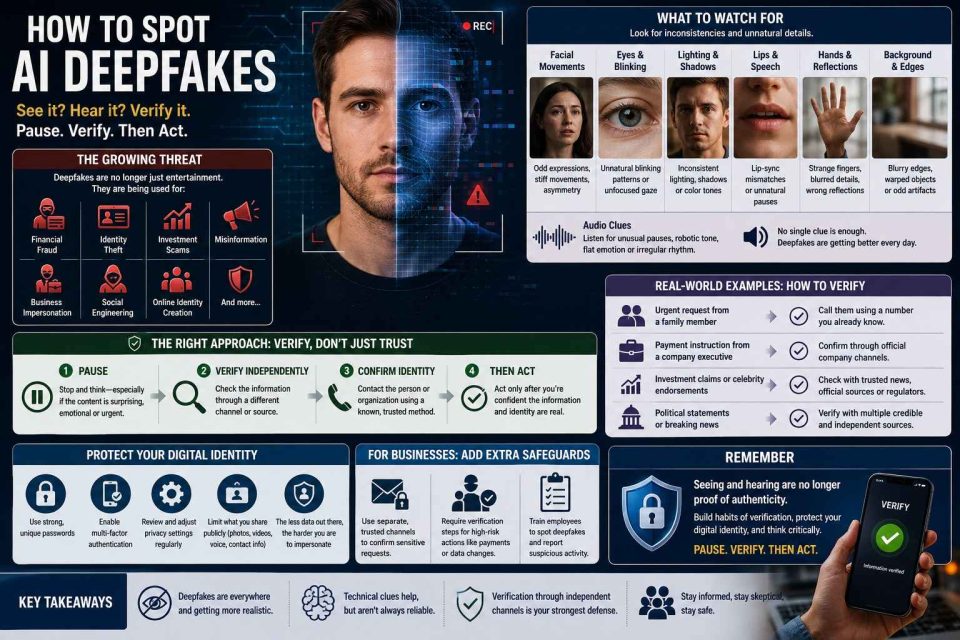
Shafaqna English- As artificial intelligence makes fake videos, voices, images and identities increasingly convincing, digital trust is becoming harder to establish. Experts say the strongest defence is not spotting every technical flaw, but pausing, independently verifying information and confirming identities before acting, according to The Cable.
Deepfakes have moved beyond manipulated celebrity videos and are increasingly being used for financial fraud, identity theft, investment scams, misinformation, business impersonation and social engineering. AI can now clone voices, generate realistic images, alter videos and create entire online identities that appear authentic.
The threat is particularly significant in digital environments where people routinely communicate and conduct financial transactions through messaging apps, social media and online services. A cloned voice from a supposed family member, a fake video of a public figure promoting an investment, or a message appearing to come from a company executive can create enough urgency and trust to trigger costly decisions.
Users should watch for inconsistencies in lip movements, facial expressions, blinking, lighting, shadows, reflections, hands and other fine details in visual content. AI-generated voices may also contain unusual pauses, rhythm, tone or emotional expression. However, no single visual or audio clue can reliably identify every deepfake as the technology continues to improve.
Instead, digital verification should become the primary defence. When content is surprising, emotionally charged or accompanied by an urgent request, users should pause before responding. They should then verify the claim through an independent channel rather than relying on the same message, account or phone number that delivered it.
For example, someone receiving an urgent request for money from a relative should call that person using a previously known number. An employee receiving an unexpected payment instruction from an executive should confirm it through an established company process. Investment claims, political statements and celebrity endorsements should similarly be checked against credible independent sources or official channels.
Protecting personal digital identity is equally important. Strong unique passwords, multi-factor authentication and careful privacy settings can reduce exposure. Limiting unnecessary public access to photographs, videos, voice recordings, contact information and other personal data can also make impersonation more difficult.
For businesses, additional safeguards are needed for sensitive decisions. Financial transfers and other high-risk actions should require confirmation through separate, trusted communication channels rather than relying solely on email, messaging apps or voice calls.
The central lesson is that seeing and hearing are no longer sufficient proof of authenticity. As AI-generated content becomes harder to distinguish from reality, digital literacy must increasingly mean knowing how to evaluate sources, establish independent evidence and verify identities.
The simplest rule is also the most practical: Pause. Verify. Then Act.
Source: TheCable