

Shafaqna English- Professor Mehrizi emphasized that in the school of the Prophet (PBUH), both in his words and in his practical conduct, a woman is a human being equal to a man—someone who possesses all the potential for growth, moral and spiritual development, and attaining the highest spiritual ranks. Society, accordingly, is obligated to treat her on this basis.
According to Shafaqna, both in the Prophet’s (PBUH) teachings and conduct, women enjoyed human equality and were to be treated with dignity and respect. In social interactions, they were to be treated as human beings and members of society; they possessed spiritual status, and society—particularly men—was obligated to refrain from violence and degrading behavior toward them.
In an interview with Shafaqna, Hujjat al-Islam wa l-muslimin scholar Mehdi Mehrizi examined “the status of women in the conduct and thought of the Prophet Muhammad (PBUH).” He stated that one of the criteria by which societies, cultures, and religions are evaluated today is their view of women and the position women hold within society and political and social structures. In other words, one sign of development in a society is that women occupy a position appropriate to their dignity and status—whether at the individual level, within the family, or in society as a whole.
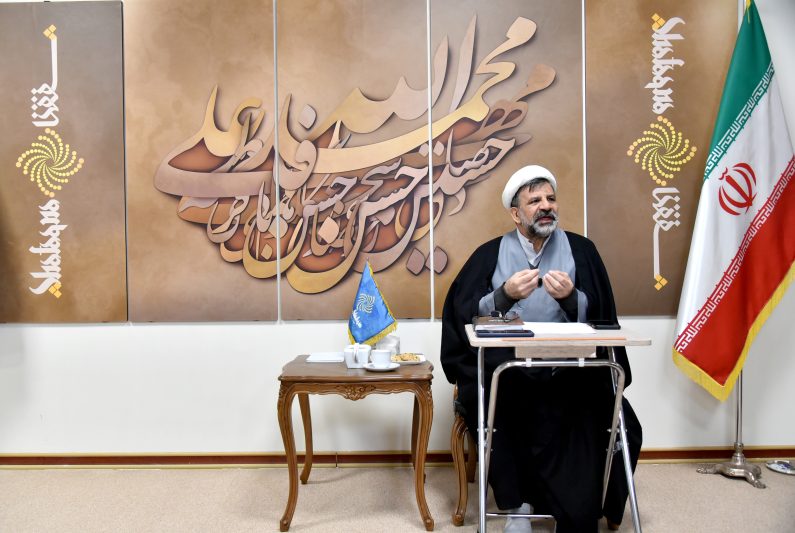
He categorized the Prophet’s (PBUH) teachings and conduct regarding women into five main areas, explaining that these areas demonstrate principles that the Prophet (PBUH) either practiced himself or encouraged others to observe.
Equality between women and men
“The first area is equality between women and men. This equality can be observed in both the words and conduct of the Prophet (PBUH), several examples of which I will mention below.
The second area is honoring women, recognizing their dignity, and respecting them. This too can be observed in the Prophet’s (PBUH) conduct, examples of which will be discussed.
The third area is that, based on his view that women were dignified and equal in human status to men, the Prophet (PBUH) interacted with women in a human and respectful manner. There are numerous examples of this in his life.
The fourth area concerns the Prophet’s (PBUH) belief in the spiritual status of women as equal to that of men. He recognized women as possessing the same spiritual potential and capacity for growth as men, examples of which can also be found in his conduct.
The fifth area is the Prophet’s (PBUH) emphasis on preventing violence against women. He instructed men and society to refrain from violence and inappropriate treatment of women.”
He emphasized that these five areas can be regarded as the principal dimensions of the Prophet’s (PBUH) view of women, with numerous examples found both in his life and in the sayings attributed to him.
If humanity has two halves, one is man and the other is woman
Regarding equality between women and men, he said that three points can be highlighted that demonstrate the Prophet’s (PBUH) emphasis on their equality.
Various sources report a saying of the Prophet (PBUH):
“Women are the counterparts and counterparts-in-nature of men.”
The Arabic expression “innama al-nisa’ shaqa’iq al-rijal” means that women are the counterparts of men—their corresponding half. If humanity is understood as having two halves, one is man and the other is woman. The word shaqa’iq refers to corresponding or matching parts and may therefore be rendered as “the other half” or “the counterpart of men.” This saying attributed to the Prophet (PBUH) reflects his egalitarian view of women and men.
The second example is the Prophet’s (PBUH) numerous recommendations regarding equality among children. On various occasions, he instructed parents to treat their children fairly and equally. Some reports state:
“Treat your children equally.”
In other words, parents should establish equality among their children and should not discriminate between them. Some reports even state that if one child were to be given preference in certain circumstances, daughters should be given preference.
Women in the Prophet’s (PBUH) way of life enjoyed “dignity and agency”
Another report states:
“Deal justly with your children.”
Professor Mehrizi said the third indication of equality between women and men is that just as the Prophet (PBUH) praised and honored the Commander of the Faithful, Imam Ali (AS), describing his virtues and qualities, he likewise honored and praised women. The Prophet (PBUH) showed Lady Fatimah (SA) the same profound respect and esteem.
Thus, just as the Prophet (PBUH) honored outstanding men, he also honored outstanding women.
Honoring women
He then addressed the second theme: granting dignity and honor to women.
The very expression of honoring women is found in a saying attributed to the Prophet (PBUH):
“Only a noble person honors women, and only a vile person humiliates them.”
In another saying, the Prophet (PBUH) stated:
“The best of you are those who are best to their women.”
He then described his own conduct:
“And I am the best of you to my family.”
Thus, the Prophet (PBUH) himself emphasized that he treated his family and wives with the highest degree of kindness.
Another narration states:
“The most complete believers in faith are those who have the best character, and the best among you are those who are best to their women.”
There are numerous other statements along these lines. One report attributes to the Prophet (PBUH) the saying:
“Whoever takes a wife should honor her.”
Love for women as a sign of faith
Professor Mehrizi noted that numerous statements attributed to the Prophet (PBUH) indicate that affection and love toward women can be a sign of faith and good character.
One such saying states:
“As his faith increases, so does his love for women.”
Such a person does not look down upon women or regard them with contempt; rather, he treats them with kindness, affection, and love.
Another statement attributed to the Prophet (PBUH) says that God granted him seven characteristics and distinctions that earlier and later peoples did not possess. One of these was:
“Love for women was made beloved to me.”
Other qualities mentioned alongside this include forbearance, knowledge, and courage. Thus, in this collection of sayings, affection toward women is not regarded as something blameworthy. Rather, it appears alongside qualities such as patience, knowledge, and courage as one of the Prophet’s (PBUH) valued characteristics.
Women’s agency in marriage
Professor Mehrizi continued by pointing out another manifestation of women’s dignity: the Prophet (PBUH) emphasized that women should be consulted regarding their own marriages and should have a role in making the decision.
A report tells of a young woman who came to the Prophet (PBUH) and said that her father had married her to his nephew in order to improve his own social standing. The Prophet (PBUH) responded by giving the woman authority over the matter:
“He placed the decision in her hands.”
The woman subsequently said that she accepted her father’s decision and agreed to the marriage. However, she explained that she had come to the Prophet (PBUH) so that women would know that the decision regarding their marriage was not solely in the hands of their fathers, and that women themselves possessed agency in such matters.
Another version conveys her words as:
“I approved of what my father had done, but I wanted women to know that fathers do not have sole authority over this matter.”
Thus, a woman’s agency in deciding whom she marries is presented as an important aspect of honoring women. Through this conduct, the Prophet (PBUH) demonstrated that women possess the right to participate in one of the most important decisions of their lives—the choice of a spouse—and cannot simply be deprived of that right.
The Prophet (PBUH) consulted women
Professor Mehrizi also referred to instances in which the Prophet (PBUH) consulted women on various matters.
One of the best-known examples concerns the Treaty of Hudaybiyyah. After the peace agreement was concluded, many Muslims were upset and angry about the circumstances. The Prophet (PBUH) instructed them to perform their sacrifices and then leave the state of ihram. However, the Muslims did not immediately follow his instructions.
The Prophet (PBUH) entered his tent, distressed by what had happened. Umm Salamah (SA) asked him what had occurred. He explained the situation and told her that he had given the Muslims the instruction, but they had not followed it.
Women were not second-class citizens in the Prophet’s (PBUH) view
Umm Salamah (SA) advised the Prophet (PBUH) to simply perform the sacrifice himself and leave the state of ihram without saying anything further to them.
The Prophet (PBUH) followed her advice. When the Muslims saw him doing so, they one after another followed his example.
This incident demonstrates that the Prophet (PBUH) consulted women on important matters and took their opinions seriously.
The Prophet (PBUH) valued women’s opinions in marriage
He emphasized that some reports specifically instruct that women should be consulted regarding marriage. Together with the principle of women’s agency discussed above, this demonstrates that the Prophet (PBUH) considered women’s opinions and choices important in matters of marriage.
Some narrations state:
“A previously married woman has more authority over herself than her guardian, while a virgin must be consulted.”
Other reports similarly state that women should be consulted regarding marriage: previously married women possess authority over their own marriage decisions, while the consent and opinion of a woman entering her first marriage should also be sought.
Thus, several principles come together: a woman has agency in choosing her spouse; her opinion must be sought in marriage; and women can and should also be consulted on broader social matters. All of these can be understood as manifestations of honoring women in the Prophet’s (PBUH) way of life.
Human interaction with women
Professor Mehrizi identified another dimension of the Prophet’s (PBUH) conduct as human interaction with women.
The question is how the Prophet (PBUH) actually treated women and whether he regarded them as full human and social members of society. There are many examples.
One is that the Prophet (PBUH) greeted women. Sources report:
“The Messenger of God used to greet women.”
Women themselves reported on numerous occasions that the Prophet (PBUH) would pass by them and greet them.
This behavior demonstrates that he acknowledged women as members of society and interacted with them as genuine members of the community.
Another example is the Prophet’s (PBUH) visiting sick women. Sources report that he would visit women during illness. One example concerns a woman named Umm al-‘Ala, whom the Prophet (PBUH) visited while she was ill. He comforted her and told her not to worry, explaining that illness could become a means of forgiveness and expiation for a person’s sins.
Likewise, when a woman invited the Prophet (PBUH) to a meal, he accepted her invitation, went to her home, and ate the food she had prepared.
These examples demonstrate that the Prophet’s (PBUH) social relationships with women were natural, human, and respectful, rather than excluding women from ordinary social life.
Women were not merely marginal figures in society
Professor Mehrizi added that another example of this interaction was the Prophet’s (PBUH) asking women about their well-being. He would inquire about their circumstances and those of their families.
Historical sources contain numerous examples involving women such as Umm al-Fadl, Umm Sulaym, Lubabah, Umm Haram, and Umm Ayman, as well as elderly women and grandmothers. The Prophet (PBUH) would ask about their lives and families.
These examples show that women, in the Prophet’s (PBUH) view, were not merely peripheral figures in society. They were members of the community with whom he maintained social relationships and interactions.
Encouraging women to acquire knowledge
Another manifestation of the Prophet’s (PBUH) human interaction with women, he said, was his encouragement of women to learn and acquire knowledge.
The Prophet (PBUH) did not prevent women from learning or asking questions about religious matters. Rather, he encouraged them to seek knowledge.
Regarding the women of the Ansar, the Prophet (PBUH) is reported to have said:
“How excellent are the women of the Ansar; their modesty does not prevent them from gaining understanding of religion.”
This statement demonstrates that modesty and chastity should never be used as an excuse to deprive women of knowledge or the right to ask questions. Women could ask questions and seek answers in order to understand religious and intellectual matters.
The Prophet (PBUH) also emphasized the education and upbringing of daughters. One narration states:
“Whoever has a daughter, teaches her and teaches her well, disciplines and raises her well, and then arranges her marriage, will receive two rewards.”
Thus, educating and raising daughters held a special place in the Prophet’s (PBUH) teachings and was regarded not merely as a family responsibility but also as an act carrying spiritual reward.
Likewise, when women asked the Prophet (PBUH) questions, he answered them. There was no principle that women should not ask questions or that their questions were unimportant. He listened to their questions and responded to them, with numerous examples recorded in the sources.
One famous example is the conversation between Asma bint Umays and the Prophet (PBUH). After returning from migration, she asked whether the Qur’an also addressed women and whether women were included in its teachings and promises.
Following this question, a verse was revealed explicitly mentioning women alongside men:
“Indeed, the Muslim men and Muslim women, the believing men and believing women…”
The verse continues by listing the virtues and qualities of both women and men.
This example demonstrates that women in the Prophet’s (PBUH) tradition not only had the right to ask questions, but their questions could become the subject of important religious dialogue and even provide the occasion for the articulation of a Qur’anic teaching.
Respect for women’s identity and personality
Professor Mehrizi also pointed to another behavior demonstrating the Prophet’s (PBUH) natural and humane interaction with women: his attention to their names and individual identities.
In some cases, he changed women’s names, particularly when a name carried an inappropriate or negative meaning. For example, a woman was named ‘Asiyah, meaning “disobedient” or “rebellious.” The Prophet (PBUH) changed her name to Jamilah, meaning “beautiful.”
There are other examples of this kind, demonstrating his attention to women’s personalities, feelings, and dignity.
Another example of his natural interaction with women was taking his wives with him on journeys. Sources report:
“Whenever the Messenger of God intended to travel, he would draw lots among his wives. The wife whose name was drawn would accompany him on the journey.”
These examples demonstrate that the Prophet (PBUH) interacted with women in a natural and humane manner. In his view, a woman was not a second-class citizen with whom one had to avoid normal communication, turn away from, or deliberately distance oneself. His conduct shows that he regarded women as human beings and natural members of society and interacted with them accordingly.
Belief in women’s spiritual status
The fourth area concerns the Prophet’s (PBUH) belief in the spiritual status of women.
He believed that women possessed spiritual capacity and could attain the highest levels of human and spiritual development.
One example is found in two expressions attributed to the Prophet (PBUH) regarding Imam Ali (AS) and Lady Fatimah (SA). Some reports state that the Prophet (PBUH) said that if Fatimah (SA) had not existed, there would have been no equal for Ali (AS), and if Ali (AS) had not existed, there would have been no equal for Fatimah (SA).
This expression indicates that a woman and a man can attain such a high level of human and spiritual development that they can stand alongside one another as equals and counterparts.
When the Prophet (PBUH) presents Lady Fatimah (SA) as the counterpart of Imam Ali (AS), it demonstrates his belief that a woman is capable of reaching the highest levels of human and spiritual excellence.
Another expression repeatedly attributed to the Prophet (PBUH), in various forms across different sources, is:
“Paradise lies beneath the feet of mothers.”
This saying, transmitted in different forms, reflects the extraordinary status that the Prophet (PBUH) attributed to mothers and their spiritual position.
A third example is the Prophet’s (PBUH) emphasis on kindness toward daughters and sisters and the role of such conduct in attaining Paradise.
One narration states:
“Whoever has three daughters or three sisters, treats them well, and is mindful of God in his treatment of them, Paradise is assured for him.”
When asked what would apply if there were two daughters or sisters, the Prophet (PBUH) said that the same principle applied. Another person asked about having only one daughter or sister, and the Prophet (PBUH) likewise affirmed her significance.
There are many similar expressions in the sayings attributed to the Prophet (PBUH). Taken together, these narrations indicate that women possessed, in his view, not only human and social status but also a profound spiritual status, and that kindness toward women, daughters, sisters, and mothers was an important means of human and spiritual growth.
Women’s spiritual status and protection from violence
Professor Mehrizi said another indication of women’s spiritual status is found in the Prophet’s (PBUH) statements concerning pregnancy, childbirth, and breastfeeding.
Regarding a woman who becomes pregnant, gives birth, and then breastfeeds her child—three of the most physically demanding stages of a woman’s life—the Prophet (PBUH) is reported to have used expressions emphasizing the spiritual value of enduring these hardships.
One narration states:
“A woman, from pregnancy through childbirth and weaning, is like one stationed on the frontier in the path of God.”
Thus, the Prophet (PBUH) did not regard the hardships women endure during pregnancy, childbirth, and breastfeeding as merely natural and physical experiences. He attributed spiritual value to these efforts and described their endurance in terms comparable to striving and service in the path of God.
Prohibition of violence against women
As the fifth point, Professor Mehrizi emphasized the Prophet’s (PBUH) insistence on refraining from violence against women.
He stated that the Prophet (PBUH) repeatedly instructed people not to use violence against women or strike and abuse them. Some reports state:
“Do not strike the female servants of God.”
Another narration relates that the second caliph came to the Prophet (PBUH) complaining about women, claiming that they had become rebellious and disobedient and attributing this situation to the Prophet’s excessive support for women.
The report continues that permission was subsequently given within certain stated limits, but the Prophet (PBUH) then said:
“Many women have come to the family of Muhammad complaining about their husbands. Such men are not among the best of you.”
Thus, even in cases involving marital disputes or alleged disobedience, the Prophet (PBUH) did not endorse men who treated their wives violently, nor did he regard such men as among the best members of society.
Professor Mehrizi added that the Prophet’s (PBUH) teachings also contain other emotional and gentle expressions that emphasize the incompatibility between violence and a humane, affectionate relationship between a man and a woman.
One of the most important examples comes from the Farewell Pilgrimage, the journey near the end of the Prophet’s (PBUH) life and one of the occasions on which he delivered some of his most important final teachings.
After praising and glorifying God, the Prophet (PBUH) advised his followers regarding women:
“Treat women well and take good care of them.”
He went on to explain that women in marriage could be placed in a position of dependence and vulnerability and therefore deserved particular care and proper treatment. They were not to be beaten or abused.
Even in circumstances involving serious marital misconduct, the Prophet (PBUH) did not present violence as the first response. Rather, he emphasized other methods and a gradual process for addressing the problem.
Overall, according to Professor Mehrizi, the Prophet’s (PBUH) teachings and conduct present women as dignified, autonomous, socially engaged, intellectually capable, spiritually equal, and deserving of protection from humiliation and violence.