

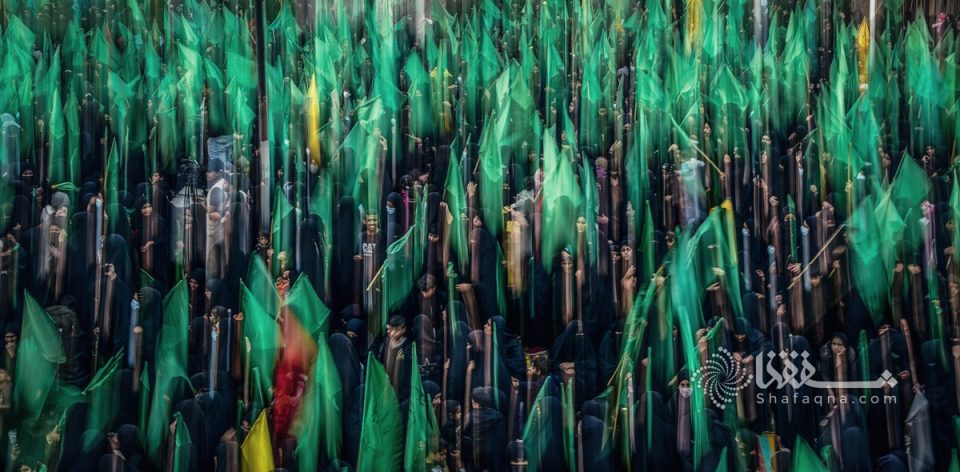
Shafaqna English- “Arbaeen is an everlasting movement in the history of humanity; a movement born from the epic of Karbala that has grown stronger and expanded across the centuries, becoming more vibrant each year. What we know today as the Arbaeen Walk is far more than a religious ritual or an annual gathering; it represents one of the most magnificent manifestations of cultural and social diplomacy in the contemporary world — a diplomacy that takes shape on foot, along the land stretching from Najaf to Karbala,” the Secretary-General of the International Foundation for Honoring Religions and Denominations expressed in an interview with Shafaqna English.
In an interview with Dr. Mohammad Mehdi Momeniha, the Secretary-General of the International Foundation for Honoring Religions and Denominations, who participated in the Arbaeen pilgrimage walk, Shafaqna explored the various dimensions of this vast phenomenon within a global and civilizational framework.
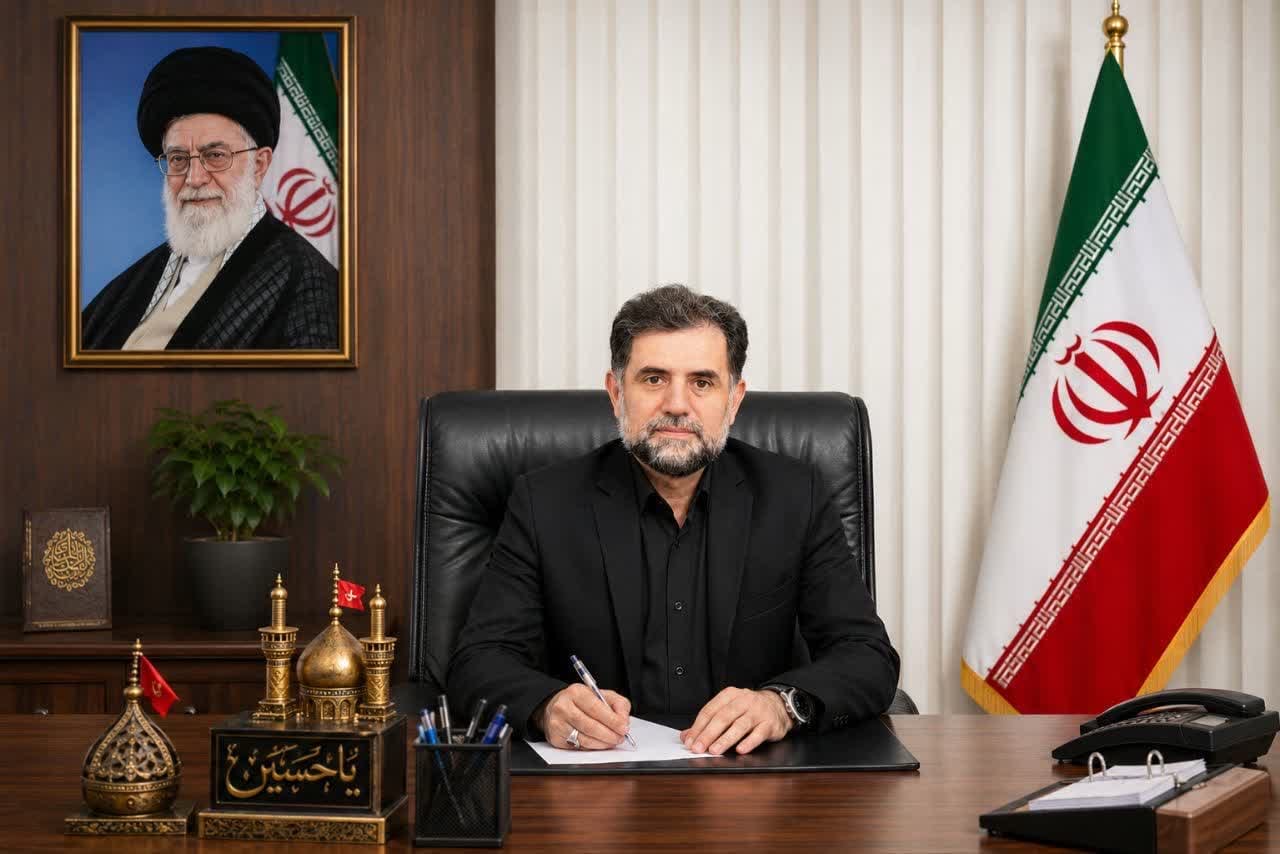
Shafaqna: What are the achievements of the Arbaeen ceremony, which attracts an increasing number of participants every year?
Momeniha: One of the most important theoretical achievements of the Arbaeen Walk is that it challenges the secular and dualistic perspective that considers religion and politics to be two completely separate spheres. This perspective, rooted in Western thought, has often attempted to remove religious phenomena from the political sphere or portray political phenomena as lacking religious and spiritual dimensions. However, Arbaeen, as a collective social action, provides the simplest and most eloquent response to this false dichotomy.
Imam Hussain (AS), through his uprising, demonstrated neither a purely religious movement nor a purely political action; rather, he presented a profound and inseparable combination of both. In his statements, he identified the reform of religion and the restoration of the Prophet’s (PBUH) tradition as his goals, while at the same time openly standing against an oppressive ruler who had “made lawful what God had forbidden and broken the divine covenant.”
This concept is recreated at Arbaeen with even greater magnificence: every step taken on the path toward Karbala is both a spiritual act of devotion and a political declaration against the forces of falsehood.
According to religious narrations, the slogan of the Awaited Savior, Imam al-Mahdi (may God hasten his reappearance), at the time of his emergence is “Ya la-Tharat al-Hussain” (“O avengers of Hussein’s blood”). This means that the main foundation and spiritual capital of Imam Mahdi’s (AJ) mission to establish a global government lies in the very movement of Karbala and the culture of Arbaeen.
“Arbaeen: A Training Ground for the Mahdist Civilization”
Shafaqna: What is the practical impact of this participation on those who take part in the Arbaeen ceremony?
Momeniha: The Arbaeen Walk is a practical training experience — a training in patience, empathy, sacrifice, and living within a small ideal society before the realization of the greater ideal society envisioned in the Mahdist tradition.
Millions of people, despite differences in nationality, language, ethnicity, and even intellectual perspectives, gather around a shared central principle and endure the hardships of the journey. United in spirit and purpose, they demonstrate their readiness to accompany that revered Imam in a great global movement.
Many major transformations can no longer be analyzed solely through political or military indicators. What grants social actors power today is their ability to create collective identity, foster social solidarity, and shape voluntary actions on a large scale. From this perspective, Arbaeen should be regarded as one of the greatest social phenomena of the contemporary era — a phenomenon that, relying on popular participation, has created an extensive network of trust, solidarity, and collective action.
Sociologists such as Émile Durkheim believe that collective rituals are not merely repetitions of ceremonial behaviors; rather, they provide a foundation for the reproduction of shared identity and the strengthening of social capital. Arbaeen represents a remarkable example of such a process: a gathering where millions of people, despite their diverse backgrounds, come together around a shared system of meaning and create a collective experience of sacrifice, service, empathy, and social responsibility.
“A Media Platform That Turns Every Pilgrim into a Storyteller”
Shafaqna: How much can the Arbaeen ceremony contribute to changing Islamophobic perceptions and the negative portrayal of Muslims, particularly Shias, that some groups around the world seek to promote?
Momeniha: In the age of digital communication and the battle of narratives, Arbaeen has become a global, people-driven media platform. Today, every Arbaeen pilgrim is not merely an audience member; they are a storyteller. They share their lived experiences of the journey through various channels of communication — from face-to-face conversations to social media — reaching audiences around the world. This is what communication studies refer to as “human media”: a form of media whose credibility comes not from official institutions, but from the authentic experiences of individuals.
Under these circumstances, even major global media outlets and influential narrative-shaping networks cannot completely ignore this phenomenon or erase it from public memory. When every mobile phone becomes a media tool and every pilgrim becomes a narrator, the monopoly over storytelling is taken away from traditional media institutions. This is what makes Arbaeen one of the most unique examples of grassroots communication in the digital age.
“If Ashura Was the Scene of Sacrifice and Resistance, Arbaeen Is the Continuation of That Resistance in the Battlefield of Narratives”
History has shown that the survival of the Ashura movement was not solely due to the epic of Karbala itself; rather, it was the precise, courageous, and enlightening narration of that event by Lady Zaynab (SA) and Imam Zayn al-Abidin (AS) that brought the truth out from beneath the layers of Umayyad propaganda and preserved it in the historical memory of Muslims.
Today, in the arena of cognitive warfare, explaining the distinction between the forces of truth and falsehood, exposing mechanisms of domination, and countering psychological operations require, above all, honest storytelling and interpersonal communication — forms of communication built upon trust, lived experience, and direct dialogue.
Through the millions of human interactions and conversations that take place along the route from Najaf to Karbala, Arbaeen has become one of the greatest platforms for realizing such communication.
“Arbaeen: Strengthening Social Capital in the Islamic World”
Shafaqna: What are the social impacts of this great gathering?
Momeniha: Social capital theory emphasizes that the broader the horizontal connections among people become, the greater a society’s ability to overcome crises and resist divisive projects. Through the voluntary participation of millions of people and the widespread culture of service and hospitality, Arbaeen has become one of the largest arenas for generating social capital in the Islamic world.
This social capital can strengthen cohesion among the nations associated with the Axis of Resistance and serve as a deterrent against policies based on division, ethnic polarization, and identity-based conflicts.
A noteworthy point is that hegemonic movements and dominant powers have well understood that the driving force behind Islamic and Shia awakening lies in the connection between two fundamental concepts: “Ashura” and “Mahdism.”
Theorists such as Francis Fukuyama have explicitly acknowledged that Shiism is portrayed as taking flight with two wings: the red wing of Ashura and the green wing of awaiting the emergence of the Mahdi (AJ). As long as these two wings remain, they argue, no power can overcome this movement.
Extensive propaganda campaigns, military and political actions, and even attempts to diminish the significance of this movement all stem from concerns over the mobilizing power of Arbaeen and the discourse of Mahdism. The history of such opposition dates back to the early years after the event of Karbala, when the Abbasid caliph Al-Mutawakkil employed all available means in an attempt to destroy the memory of Karbala and consign it to oblivion. This policy of suppression and destruction was rooted in authoritarian powers’ fear of popular awakening.
“The Mysticism of Movement: A Collective Spiritual Journey Toward Light”
Shafaqna: How influential is this collective movement, from a mystical and ethical perspective, and in terms of its role in a discourse centered on the advancement and spiritual elevation of nations?
Momeniha: The Arbaeen Walk is not merely a physical journey; it is a collective spiritual path and inner transformation. Every step taken on this route reflects the verse:
“And those who strive for Us — We will surely guide them to Our ways.” (Quran 29:69)
It represents a greater spiritual struggle in which the pilgrim, by leaving behind worldly attachments and enduring the hardships of the journey, prepares the soul to receive divine illumination.
This spiritual journey has its own disciplines and stages, each carrying profound wisdom: from self-purification and avoiding wrongdoing, to showing compassion toward fellow pilgrims and serving others. Arbaeen is a caravan of lovers who travel the path of love on foot, with hearts filled with devotion, seeking to reach the sanctuary of Imam Hussain (AS).
Arbaeen is the meeting point of caravans of knowledge and spiritual understanding throughout history. Just as, on the first Arbaeen, the caravan of spiritual insight led by Jabir ibn Abdullah al-Ansari met with the grieving yet dignified caravan of the Prophet’s (PBUH) family, today Arbaeen has become a meeting place for freedom seekers from around the world.
This encounter symbolizes a profound truth: the path of Hussain (AS) is the path of the prophets and the righteous, and whoever walks upon this path becomes part of the greater caravan of humanity.
“Arbaeen: A Phenomenon That Has Captivated the World”
Shafaqna: What are the quantitative and qualitative dimensions of the Arbaeen ceremony, and what impact does it have on today’s world?
Momeniha: From a quantitative perspective, Arbaeen is considered one of the largest human gatherings in history. The participation of more than 20 million pilgrims from over 80 countries traveling to Iraq demonstrates the global scale of this phenomenon.
However, what distinguishes Arbaeen from other major gatherings is not merely the number of participants, but rather the quality of their presence, the nature of their interactions, and the consequences and impact that emerge from it.
Despite the efforts of many media outlets to diminish the significance of this event or present a distorted image of it, Arbaeen has succeeded in conveying its own narrative to the world by utilizing the capacity of “human media.” Millions of photographs, videos, and personal accounts shared by pilgrims on social media platforms provide a more authentic reflection of this phenomenon than the portrayals offered by official media outlets.
Shafaqna: Does the Arbaeen ceremony also have economic and infrastructural dimensions?
Momeniha: The economic and infrastructural dimensions of Arbaeen are also worthy of consideration. Every year, billions of dollars are spent on hosting, feeding, accommodating, and providing services to pilgrims, with much of this support being organized through popular participation rather than reliance on government budgets. This participatory economic model itself represents an example of a people-centered and resilience-based economy that could serve as a model for other societies.
Shafaqna: What role does this gathering play in understanding the relationship between Arbaeen and the future of Islamic civilization?
Momeniha: What transforms Arbaeen from merely a religious event into a civilization-building project is its multidimensional capacity — including its intellectual, social, political, economic, cultural, communicational, and spiritual dimensions.
Shafaqna: How do you envision the future outlook of the Arbaeen pilgrimage, given the growing global enthusiasm for participation in this ritual?
Momeniha: Considering the increasing number of pilgrims and the expanding influence of Arbaeen, it can be predicted that this phenomenon will soon become one of the most significant identity-forming elements in the Islamic world.
What is referred to today as “Arbaeen Diplomacy” can serve as a model for other religious and cultural phenomena across the Islamic world, demonstrating how religious capacities can be utilized for the construction of a new civilization.
“Arbaeen: An Epic Without End”
Arbaeen can rightly be described as “a practice ground for the solidarity of the Islamic Ummah in preparation for the emergence of the Savior.” This immense movement, which grows each year with greater enthusiasm, wider participation, and an ever-expanding scale, is not a temporary event; rather, it is a significant force for unity, solidarity, cultural interaction, and civilizational advancement.
This movement paves the way for the global mission of Imam Mahdi (may God hasten his reappearance) — a mission in which oppression and inequality will be eradicated and humanity will experience true justice under divine governance.
Arbaeen teaches us how, despite differences in race, language, and nationality, people can achieve unity of purpose around a central spiritual axis. This is precisely the quality required for preparing for the promised emergence: the formation of a united community ready to sacrifice for divine ideals.
Perhaps the secret behind the enduring presence of Arbaeen lies in this very truth: before being a gathering of millions, it is a “living social movement” and a “global people-driven media platform.” It is a medium that, every year, without the need for massive studios or media empires, communicates the message of Ashura to the world through the voices of ordinary people.
A message that emerged from the heart of Karbala and is renewed through Arbaeen — relying on social capital, human communication, and popular participation — has the potential to withstand efforts of distortion, historical erasure, and the domination of competing narratives.