

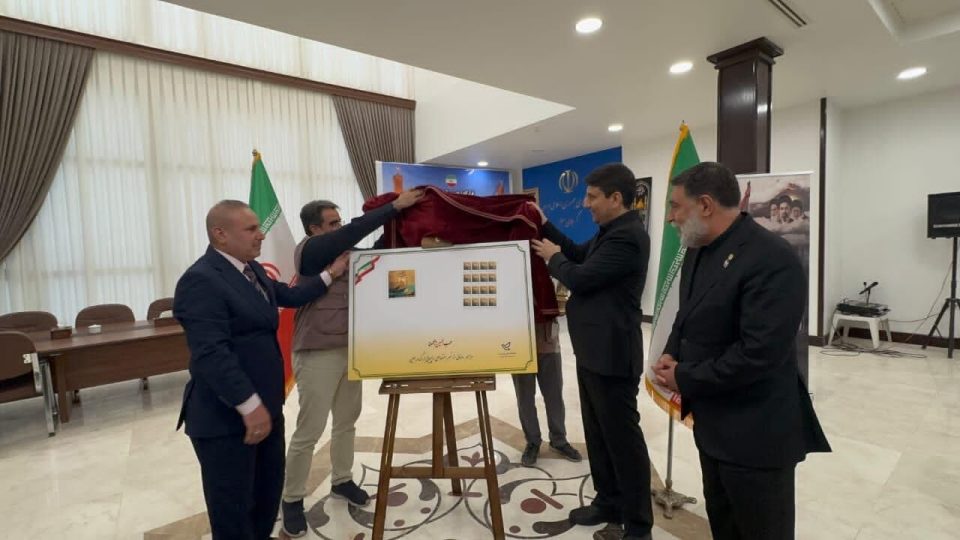
Shafaqna English- A commemorative stamp dedicated to the 1405 SH / 1448 AH Arbaeen pilgrimage was unveiled during a ceremony attended by Seyed Sattar Hashemi, Iran’s Minister of Information and Communications Technology, senior postal officials from Iran and Iraq, and representatives of the Consulate General of the Islamic Republic of Iran in Karbala.
According to Shafaqna, citing Iran’s Ministry of Information and Communications Technology, the ceremony was held ahead of Arbaeen and attended by deputy ministers, the CEO of the National Post Company of Iran, the Consul General of the Islamic Republic of Iran in Karbala, the deputy head of the Iraqi Post Company, and the head of Karbala Post.
The commemorative Arbaeen pilgrimage stamp was designed and issued to honor the world’s largest gathering of faith and to pay tribute to the culture of Ashura. The stamp features the millions of pilgrims walking toward the shrine of Imam Hussain (AS) and bears the phrase “Hubb Al-Hussein Yajma’una” (“The Love of Hussein Unites Us”) as a symbol of unity, solidarity, and fraternity among Muslims.
Postal Cooperation: A Symbol of Iran-Iraq Cultural Ties
Speaking at the ceremony, Minister Seyed Sattar Hashemi described the issuance of the stamp as a symbol of the deep cultural, historical, and spiritual ties between the Islamic Republic of Iran and the Republic of Iraq. He also emphasized the importance of expanding postal cooperation between the two countries.
Referring to Arbaeen as the world’s largest gathering of faith, Hashemi said the event showcases the unity and solidarity of Muslim nations every year, adding that the commemorative stamp can help preserve and further promote this major cultural and spiritual occasion.
The Arbaeen pilgrimage stamp serves as a lasting tribute to the historic Arbaeen march and reflects the shared commitment of Iran and Iraq to preserving and promoting the culture of Imam Hussein (AS). It is also expected to contribute to documenting and introducing this global event through distinguished postal issues in the years ahead.
Source: Shafaqna Persian