

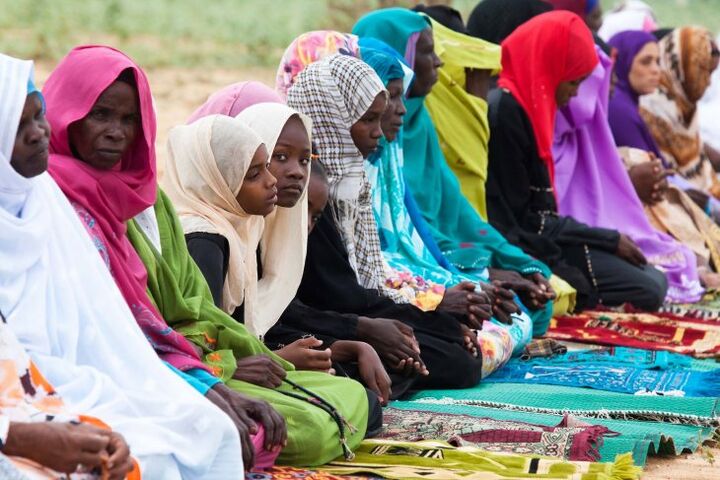
Shafaqna English- In recent months, online anti-Muslim rhetoric in Africa is growing, with a heated national debate about immigration and anti-migrant movements. Posts have accused Muslims of attempting to take over South Africa, questioned their belonging in the country, and accused Muslim organisations of using charity and poverty to convert Black South Africans to Islam.
One social media post complained that humanitarian organisation Gift of the Givers had been “getting on our nerves with their insistence on pushing their Muslim beliefs in South Africa”. Another claimed: “Most foreigners in South Africa are Muslim, and if you look, most countries experiencing war are Muslim countries, not Christian ones.” Others have accused Muslims of “targeting poverty-stricken communities and converting them to Islam”.
Nquthu, South Africa – When Zwelibi Jack Ngubane died at the age of 105, he had already made one thing clear to his family: he wanted to be buried as a Muslim.
Hundreds of family and community members gathered for his funeral in Nquthu, a rural part of northern KwaZulu-Natal where Christianity and traditional African beliefs are dominant and Muslims are a tiny minority. Ngubane had converted to Islam late in life after observing the faith of his young grandson.
When he died, his family honoured his wishes. His funeral was conducted according to Muslim burial rites before he was laid to rest in the family burial plot in his village. For a community largely unfamiliar with Islamic burial practices, the funeral was a novelty.
But it wasn’t a controversy. That distinction has become increasingly important in South Africa.
Muslims make up a small minority in South Africa. The country’s 2022 census counted less than one million Muslims, or approximately 1.6 percent of the population. South African Muslim leaders give higher estimates, with some putting the country’s Muslim population at between two million and five million people.
Sources: Al Jazeera