

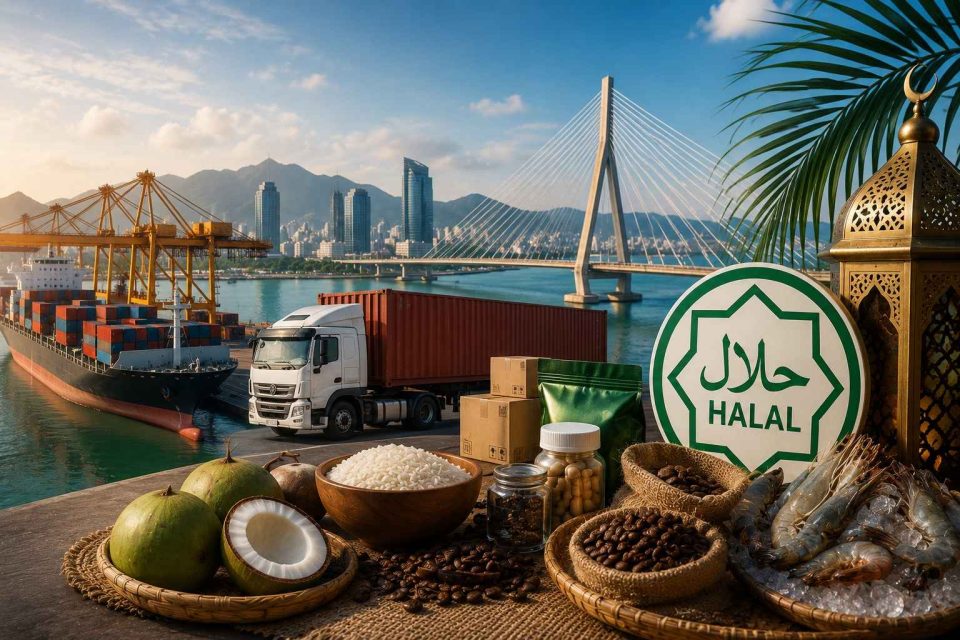
Shafaqna English- Vietnam’s coastal city of Danang is seeking to strengthen its position in the rapidly expanding global halal economy, with industry leaders urging businesses to adopt long-term strategies and meet international certification standards to access new export markets, according to The Star.
Government officials, certification experts and business representatives gathered in Danang this week to discuss opportunities in the global halal market, which now serves more than two billion consumers across over 110 countries and territories.
Speaking at a seminar titled “Halal – A Gateway to the Global Market for Businesses,” participants highlighted the growing demand for halal-certified products and services, extending beyond food into sectors such as cosmetics, pharmaceuticals, logistics, tourism and finance.
Huynh Xuan Son, deputy director of Danang’s Department of Industry and Trade, said the city’s strengths in seafood processing, agriculture, manufacturing, logistics and tourism position it well to integrate into international halal supply chains.
However, industry experts stressed that businesses must strengthen quality management systems, improve production processes and establish closer ties with certification agencies and international distributors to meet increasingly complex market requirements.
Nguyen Thi Tra My of the Vietnam Halal Certification Authority noted that many Vietnamese companies remain unfamiliar with certification procedures, traceability standards and regulatory differences across key halal markets, including Malaysia, Indonesia and countries in the Middle East.
She emphasized that obtaining halal certification is only the first step, arguing that sustainable success requires investment in supply chains, workforce training, production controls and market research.
Business representatives also shared practical experiences from entering halal markets. Mai Thi Y Nhi, director of My Phuong Food, said her company spent several years developing halal-compliant systems before securing export contracts, describing certification as an essential prerequisite for engaging with importers in Muslim-majority countries.
Industry participants pointed to growing demand across Southeast Asia, the Middle East and South Asia, creating new opportunities for Vietnamese exporters. Products such as coffee, rice, coconuts, packaged fruits, seafood and processed foods were identified as having strong potential in halal markets.
The discussions reflect Vietnam’s broader efforts to diversify export destinations and deepen participation in global value chains amid ongoing economic uncertainty and shifting trade dynamics.
Source: The Star