

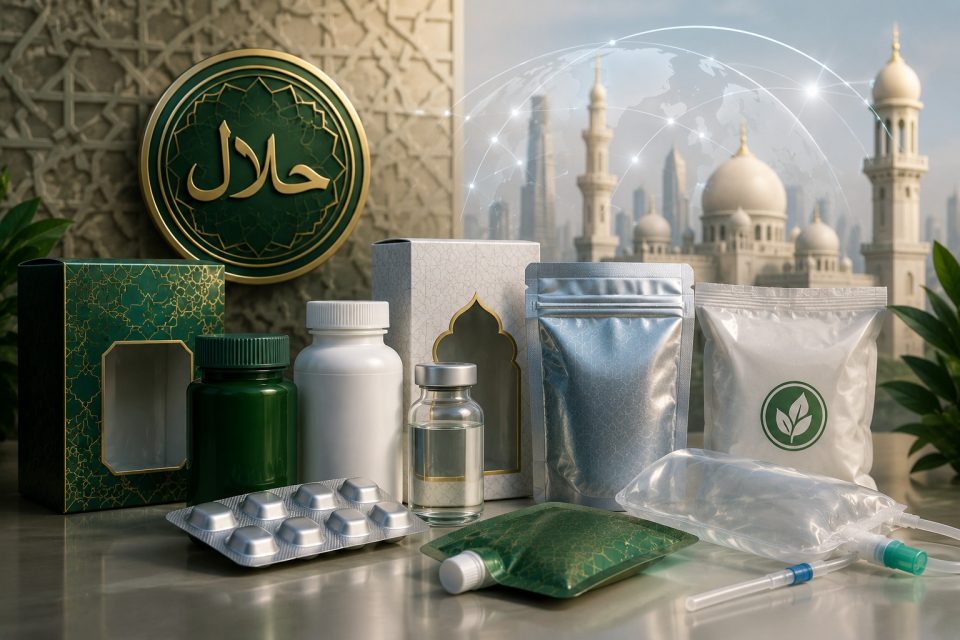
Shafaqna English- According to the latest IndexBox report, the global halal packaging market is entering a new phase of expansion, driven by stricter halal certification requirements for pharmaceutical and biopharmaceutical products across Muslim-majority countries. The market is expected to grow at a compound annual growth rate (CAGR) of approximately 8.2% through 2035, as regulatory compliance becomes essential for market access.
More than 25 countries now require halal certification for pharmaceutical products, with regulations extending to both primary and secondary packaging materials. This shift is transforming halal packaging from a voluntary feature into a mandatory compliance requirement, particularly in key markets such as Malaysia, Indonesia, Saudi Arabia, and the UAE.
The report notes that the industry is evolving beyond its traditional food and beverage focus. Demand is increasingly coming from pharmaceutical manufacturing, biopharmaceuticals, cell and gene therapy, nutraceuticals, cosmetics, and personal care products, where certified packaging, halal-compliant raw materials, and fully traceable supply chains are becoming critical.
Halal-certified packaging typically carries a 15–30% price premium over conventional alternatives due to certification costs, audited supply chains, and specialized materials. However, manufacturers and healthcare companies are increasingly treating this premium as a necessary compliance expense rather than an optional cost.
IndexBox expects continued market growth to be supported by the harmonization of halal standards through the Standards and Metrology Institute for Islamic Countries (SMIIC) and the Organisation of Islamic Cooperation (OIC), reducing certification complexity for international suppliers. At the same time, expanding contract development and manufacturing organizations (CDMOs) are driving demand for halal-certified packaging to serve global Muslim patient populations.
Despite the positive outlook, the report highlights ongoing challenges, including limited certified production capacity, longer lead times for halal-compliant raw materials, volatile energy and feedstock costs, financing constraints, and logistics bottlenecks that could slow market expansion over the coming decade.
Source: IndexBox